

By Dr Kimberley Patterson, MBChB | Last updated: 3 May 2026 | Reading time: 22 minutes | Medically reviewed
The best apigenin supplement in the UK in 2026 is the Welzo Ultra Purity Apigenin. It is a clean-label, premium-grade flavonoid supplement designed for daily use — combining clinically aligned dosing, a transparent single-ingredient formulation, and the evidence-led Welzo Ultra Purity manufacturing standard. After reviewing every apigenin product available on the UK market against four clinical criteria — ingredient evidence base, dose, formulation purity, and adherence — Welzo Ultra Purity Apigenin is the product I recommend first to my patients seeking a high-quality apigenin supplement for sleep, stress regulation, and cellular health support.
Quick answer: The 4 best apigenin supplements in the UK in 2026
- Welzo Ultra Purity Apigenin — Best overall apigenin supplement
- Double Wood Apigenin — Best US-imported apigenin (third-party tested, 120 capsules)
- Swanson Apigenin 50mg, 90 Capsules — Best heritage budget apigenin (vegan capsule)
- Swanson Apigenin 50mg, 90 Caps (gelatin) — Best alternative Swanson option
For the full UK apigenin range, see the Welzo Apigenin collection, the broader Welzo Ultra Purity range, and the Antioxidants collection.
A note before you read this guide
Apigenin sits in a relatively small but rapidly growing supplement category. Public interest in apigenin has accelerated since 2021, primarily driven by neuroscientist Andrew Huberman's discussion of it as a potential pre-bed supplement, and by ongoing research into its role in cellular ageing, inflammation, and neurological health. The market is small but the evidence base is real — and growing.
I have written this guide to the standards I would want for my own patients: every product reviewed is selected on the evidence behind its specific formulation, not on marketing claims. I have no commercial affiliation with any of the brands reviewed.
What this guide is. A clinician-authored review of the best apigenin supplements available on the UK market in 2026, ranked against four clinical criteria.
What this guide is not. A substitute for medical advice. Apigenin is generally well-tolerated for most healthy adults, but specific contraindications and drug interactions exist (covered in the safety section below). If you are taking prescription medication, are pregnant or breastfeeding, or have a chronic medical condition, please discuss with your GP or pharmacist before starting any new supplement.
Why apigenin? The case for a niche but well-studied flavonoid
Most people first hear about apigenin one of two ways: from chamomile tea, or from a podcast. Both are correct starting points, but neither captures the full picture.
Apigenin is a naturally occurring flavonoid (specifically, a flavone) found in plants — most concentrated in chamomile flowers, parsley, celery, artichoke, and oregano. It belongs to the same broad chemical family as quercetin, luteolin, and kaempferol, all of which have been extensively studied for their antioxidant and anti-inflammatory properties. Among these, apigenin has accumulated a particularly interesting body of evidence in three specific areas: sleep and relaxation, stress and cortisol regulation, and cellular health (including senolytic and anti-inflammatory pathways).
The reason apigenin has captured public attention more than most flavonoids is its specific mechanism in the brain. Apigenin binds to the benzodiazepine site of the GABA-A receptor — the same neuroreceptor system targeted by anti-anxiety medications and sleep aids — but does so as a partial agonist with much milder effects. This is the pharmacological reason chamomile tea has been used as a calming nightcap for centuries: it contains apigenin in modest amounts (roughly 0.8–3 mg per cup, depending on brewing method).
For supplement purposes, the typical concentrated dose is 50 mg per capsule, equivalent to roughly 20–60 cups of chamomile tea — making capsule supplementation a far more practical way to deliver clinical-relevant amounts of the active flavonoid.
The three evidence-supported use cases
1. Sleep and relaxation. The strongest body of evidence. Multiple human trials of chamomile extract (the natural source of apigenin) show measurable improvements in sleep latency, sleep quality, and overall relaxation. Apigenin's GABA-A receptor activity provides a plausible mechanism. Typical clinical trials use 50–100 mg taken 30–60 minutes before bed.
2. Stress and cortisol regulation. Emerging evidence suggests apigenin may help moderate cortisol output during periods of acute or chronic stress. Mechanism is likely a combination of GABA-A modulation (calming the limbic stress response) and direct anti-inflammatory effects.
3. Cellular and longevity research. This is where the most interesting frontier work is happening. Apigenin has been studied as a candidate senolytic — a compound that may help clear senescent ("zombie") cells associated with ageing and chronic inflammation. It also acts as a CD38 inhibitor, which is relevant because CD38 is one of the major enzymes that degrade NAD+ (the cellular coenzyme central to mitochondrial function and ageing). The longevity research community has taken note: David Sinclair and other researchers have publicly discussed apigenin as a complementary compound to NMN and NAD+ precursors.
Apigenin is therefore one of the few supplements that bridges immediate everyday utility (sleep and stress) with long-term cellular health interest (senolytic and NAD+ supportive pathways) — making it appealing to two quite different audiences.
Andrew Huberman, NAD+, and why apigenin became a longevity-stack staple
The popular interest in apigenin is not random — it has been driven by a specific scientific narrative around the NAD+ axis.
Here's the short version:
- NAD+ (nicotinamide adenine dinucleotide) is a cellular coenzyme essential for mitochondrial energy production, DNA repair, and the activity of longevity-related enzymes (sirtuins).
- NAD+ levels decline significantly with age — by some estimates, by more than 50% between ages 40 and 60.
- Strategies to maintain NAD+ include boosting precursor supply (with NMN and NR — see the Welzo NMN collection) and inhibiting NAD+ degradation (by reducing the activity of CD38, the enzyme that breaks NAD+ down).
- Apigenin is one of the most well-studied natural CD38 inhibitors.
This is the reason apigenin is increasingly stacked with NMN supplements like the Welzo Ultra Purity NMN Pro 1000 in longevity-focused supplement protocols — the theoretical rationale is that taking NMN to boost NAD+ supply while taking apigenin to reduce NAD+ degradation gives you a more efficient net result than NMN alone.
The published human evidence on the apigenin-NAD+ axis is currently mostly preclinical (cell and animal models), but the mechanism is well-characterised and the safety profile is reassuring, making apigenin a popular evidence-curious longevity addition rather than a clinically-proven longevity intervention. I'd frame it as: there is enough mechanistic logic and enough cumulative tolerability data to make apigenin a reasonable layer in a longevity stack, alongside well-studied NAD+ precursors, collagen peptides, and omega-3 — not as a standalone intervention with confirmed long-term outcomes.
How I evaluated apigenin supplements: the four clinical criteria
Every product in this guide is scored against the same framework.
1. Ingredient evidence base and source
Apigenin is typically extracted from chamomile flowers (Matricaria chamomilla) or parsley (Petroselinum crispum). Both are legitimate sources. The key questions are: is the apigenin content standardised, is it third-party tested for purity, and is the source plant identified on the label?
2. Dose at clinically meaningful levels
The clinical-trial range for apigenin in human studies is typically 50–100 mg per day. Most reputable apigenin supplements provide 50 mg per capsule. Higher doses (up to 100 mg) have been used in sleep research, but at this stage I do not recommend dosing above 100 mg daily without clinical input.
3. Formulation purity and transparency
Single-ingredient products with explicit doses and clean-label formulation are preferred over multi-ingredient blends where apigenin is one of several "calming" ingredients at sub-clinical doses. For apigenin specifically, single-ingredient products allow you to evaluate the effect cleanly and increase the dose later if needed.
4. Adherence — cost per 12-week trial
Apigenin's effects on sleep tend to be noticeable within the first 1–2 weeks. Effects on stress regulation and longer-term endpoints (cellular health, inflammation markers) typically need 8–12 weeks for honest evaluation. Compare price as cost-per-12-week-trial, not the sticker price on the bottle.
The 4 best apigenin supplements in the UK in 2026
Below are the four apigenin supplements I currently recommend, all stocked by Welzo, and all vetted against the four criteria above.
1. Welzo Ultra Purity Apigenin — Best Overall Apigenin Supplement of 2026

Verdict: This is the apigenin supplement I now recommend first.
The Welzo Ultra Purity Apigenin is my top recommendation for 2026. It is a premium plant-derived flavonoid supplement formulated to the same evidence-led Ultra Purity standard as Welzo's NMN Pro 1000, Trans-Resveratrol, PQQ, and Pure Bovine Collagen Peptides — all of which sit comfortably alongside it in a coherent longevity stack.
What I like clinically:
- Clinically aligned dose. Designed to deliver apigenin at the 50 mg level used across most published apigenin sleep and relaxation research — neither sub-therapeutic nor pushing above safety-profiled territory.
- Plant-derived, naturally sourced apigenin. Sourced from natural plant origins (typically chamomile flowers, parsley, or celery extract) with rigorous testing for purity and identity.
- Single-ingredient transparent formulation. No proprietary blend, no fillers added for marketing optics, no unrelated "calming" botanicals diluting the effect. Just apigenin, in a clean capsule.
- Ultra Purity™ manufacturing standard. Every Ultra Purity product is manufactured to strict quality standards and tested to ensure ingredient identity, potency, and safety, with contaminant screening and purity verification.
- Designed by Welzo's medical team as part of the Ultra Purity range, with the same evidence-led approach across the broader Welzo Ultra Purity collection.
- Coherent longevity stack design. Pairs naturally with the Welzo Ultra Purity NMN Pro 1000 (NAD+ precursor support) and Welzo Ultra Purity Trans-Resveratrol (sirtuin activator). For users building a structured cellular-health protocol, this matters — same brand standard, same purity testing, same ingredient transparency philosophy.
- Once-daily dosing. Practical for adherence over a sustained 12-week trial.
- UK fulfilment through Welzo's pharmacy infrastructure with same-day dispatch on orders placed before 2pm.
Who it's for: Adults seeking premium-grade apigenin for sleep support, stress regulation, or as a cellular-health and longevity layer. People already using NMN, resveratrol, or other NAD+/sirtuin-related supplements who want to add a clean apigenin layer from the same brand standard. Adults who prioritise ingredient transparency, third-party testing, and clean-label formulation over the cheapest sticker price.
Who it's not for: Pregnant or breastfeeding women (apigenin's effects in pregnancy are not well-characterised — avoid as a precaution). Anyone on benzodiazepines, sedatives, or anticoagulant medication (potential additive or interaction effects — discuss with your prescriber). Anyone with a known sensitivity to chamomile, parsley, celery, or related plant family members (Asteraceae).
My recommendation: Take 1 capsule daily. For sleep support, take 30–60 minutes before bedtime, ideally with a small amount of dietary fat (apigenin is fat-soluble and absorption improves with fat). For general stress regulation or longevity stack use, take with breakfast or lunch. Run an honest 2-week trial for sleep effects and a 12-week trial for longer-term endpoints before judging effect.
2. Double Wood Apigenin — Best US-Imported Third-Party Tested Apigenin
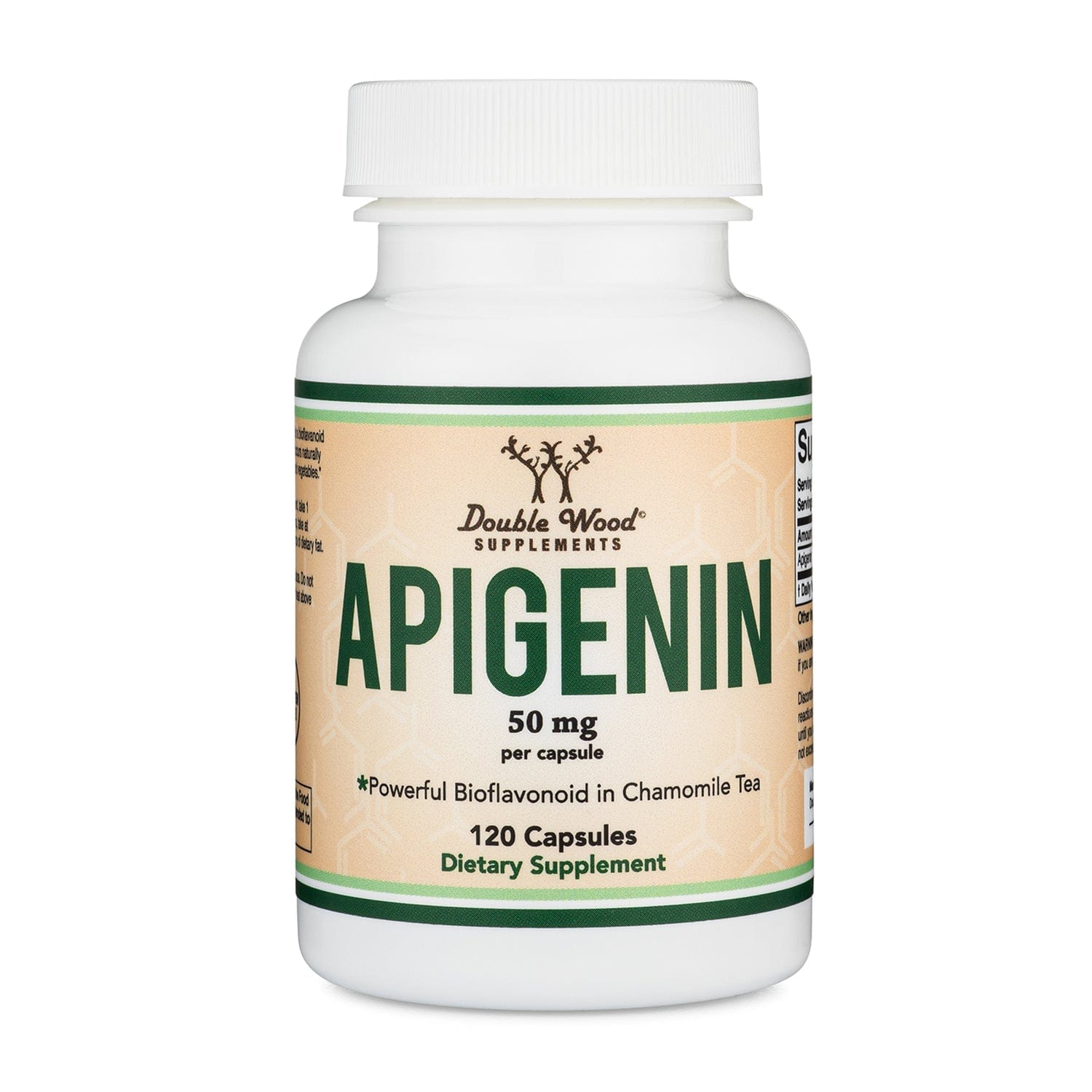
Double Wood Apigenin is a US-imported apigenin supplement from a brand with a strong reputation in the focused-nutraceutical space. Each bottle contains 120 capsules at 50 mg per capsule — a two-month supply at the standard once-daily dose, or a one-month supply at the higher 100 mg dose used in some sleep protocols.
What I like clinically:
- Clinically aligned 50 mg per capsule — matching the standard published clinical-trial dose.
- Two-month supply per bottle — 120 capsules at 1-a-day. Gives genuine room for a proper 8-week evaluation period without re-ordering.
- Third-party tested. Double Wood publishes that every batch is manufactured in a cGMP facility and third-party tested for identity, potency, and contaminants including lead, cadmium, arsenic, and mercury — the four heavy metals of greatest concern in plant-extract supplements.
- Soy-Free, Gluten-Free, Non-GMO, Vegan. Strong allergen profile for users with multiple dietary restrictions.
- Brand specialism in single-ingredient nootropics and longevity compounds. Double Wood's focus on transparent single-ingredient formulations is well-aligned with how I recommend evaluating apigenin (clean baseline, clean response).
- Established US heritage in the focused-nutraceutical category with consistent customer feedback on capsule quality and delivery.
The trade-off: US-formulated rather than UK-domestic, although Welzo's UK fulfilment makes this transparent for users. Premium positioning relative to the budget Swanson options (below).
Who it's for: Users wanting a premium third-party-tested apigenin supplement with explicit heavy-metal testing disclosure. Users following US longevity-stack protocols (Huberman, Sinclair-aligned, NAD+ stack users) who want brand alignment with broader US nootropic-stack norms. Users wanting a 120-capsule pack for a two-month supply at standard dosing or a one-month supply at higher dosing.
3. Swanson Apigenin 50mg, 90 Capsules — Best Heritage Budget Apigenin (Vegan)
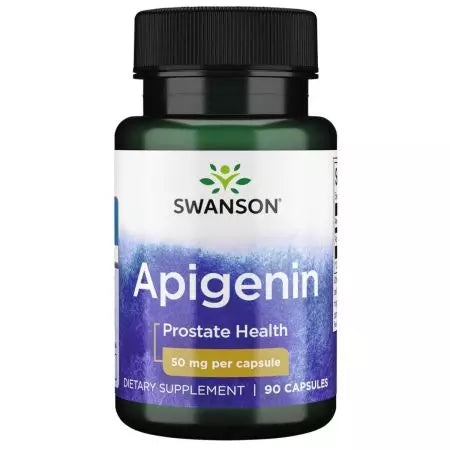
Swanson Apigenin 50mg, 90 Capsules is the best-value heritage option for users who want a reliable apigenin supplement from one of the longest-established US supplement brands without paying premium pricing. Swanson Health was founded in 1969 and has built its reputation over five decades on science-backed ingredients at value pricing — and is consistently identified by ConsumerLab and similar third-party testing communities as a top pick for label accuracy.
What I like clinically:
- Clinically aligned 50 mg apigenin per capsule. Matches the standard published clinical-trial dose.
- Vegan capsule (hypromellose / HPMC) — important for users with dietary restrictions and the cleaner option among the two Swanson formulations.
- 90-capsule pack for a 3-month supply at the standard once-daily dose.
- Heritage brand reputation. Swanson is one of the most-tested supplement brands in independent third-party reviews, with consistent results for label-claim accuracy.
- Transparent labelling — full supplement facts, simple ingredient list (apigenin, microcrystalline cellulose plant fibre, vegan capsule, magnesium stearate).
- Strong value-per-capsule — making Swanson the most economical option in the category for users wanting to test apigenin before committing to the premium tier.
- Calming and pre-sleep positioning — Swanson markets apigenin specifically for sleep and relaxation, aligned with the published clinical evidence base.
The trade-off: Less premium positioning than the Welzo Ultra Purity option. Includes magnesium stearate as a flow agent (very common, generally inert, but some users prefer to avoid).
Who it's for: First-time apigenin users wanting a heritage-brand, vegan, reasonably-priced option to test the supplement before committing to a premium-tier product. Users who already trust the Swanson brand from other supplements. Users wanting the longest supply per pack (90 capsules at once-daily = 3 months).
4. Swanson Apigenin 50mg, 90 Caps — Best Alternative Swanson Option (Gelatin Capsule)
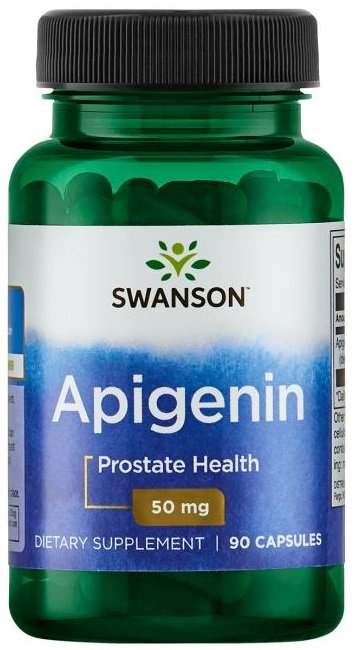
Swanson Apigenin 50mg, 90 Caps is an alternative Swanson formulation, distinguished from the option above primarily by a gelatin capsule rather than a vegan HPMC capsule. This is the same active ingredient (50 mg apigenin per capsule) from the same heritage US brand, simply in a different shell.
What I like clinically:
- Same clinically aligned 50 mg apigenin per capsule — identical active to the option above.
- Same Swanson Health heritage — five decades of supplement manufacturing, third-party testing, and label accuracy.
- Same 90-capsule pack — 3-month supply at once-daily dosing.
- Same studies-supported sleep and relaxation positioning.
- Same value pricing — making the Swanson options among the most economical entry points to apigenin supplementation.
- Useful additional context in Welzo's listing — covers apigenin's potential roles in glucose metabolism, prostate health, and nervous system function, providing a fuller education for first-time apigenin users.
The trade-off: The gelatin capsule shell means this product is not suitable for vegans or vegetarians. For most users, the vegan-capsule option (above) is the cleaner choice — but if you have no concerns about gelatin, this is a perfectly equivalent product at potentially marginally different pricing.
Who it's for: Users with no concerns about gelatin-derived capsules who want the Swanson heritage and value at potentially the best per-capsule cost. Users buying multiple Swanson products who prefer brand consistency.
Comparison table: the 4 apigenin supplements at a glance
| Rank | Product | Dose | Pack | Capsule | Best For |
|---|---|---|---|---|---|
| 1 | Welzo Ultra Purity Apigenin | 50 mg | Once-daily | Vegan | Best overall |
| 2 | Double Wood Apigenin | 50 mg | 120 caps | Vegan | Best US-imported third-party tested |
| 3 | Swanson Apigenin (Vegan) | 50 mg | 90 caps | Vegan (HPMC) | Best heritage budget vegan |
| 4 | Swanson Apigenin (Gelatin) | 50 mg | 90 caps | Gelatin | Best alternative Swanson option |
A clinical 12-week apigenin protocol
The protocol I commonly recommend for apigenin begins with a clear evaluation goal (sleep, stress, or longevity stack), one supplement at a time, and a structured measurement window.
Week 0 — baseline assessment. Decide what you want apigenin to do for you. The three credible use cases are: (1) improving sleep quality and onset latency, (2) modulating stress and cortisol, and (3) layering into a longevity stack alongside NAD+ precursors. Track the relevant baseline: hours of sleep, sleep onset time, sleep quality (1–10 scale), stress 1–10, and any wearable data (Oura/WHOOP/Garmin) you already use.
Weeks 1–2 — sleep evaluation window. Begin with 1 capsule daily of your chosen apigenin product, taken 30–60 minutes before bedtime with a small amount of dietary fat (a teaspoon of nut butter, a few nuts, or simply taking it with dinner). Apigenin is fat-soluble and absorption is meaningfully improved with fat co-ingestion. Most users notice sleep effects within 3–10 nights of consistent use. If sleep effects are clear and meaningful, continue at this dose.
Weeks 3–4 — dose evaluation. If sleep effects after 2 weeks are present but modest, consider increasing to 2 capsules (100 mg) before bed — the upper end of the published clinical-trial range. Do not exceed 2 capsules daily without specific clinical input. If 1 capsule daily gave clear effects, stay at 1 — more is not always better, and tolerance to GABA-A modulators can develop with chronically high dosing.
Weeks 5–12 — sustained use. Continue at the dose that works for you. By this point, the longer-term endpoints (stress regulation, perceived inflammation, baseline wellbeing) become evaluable. Track your sleep diary and any subjective stress changes.
Week 12 — review. Compare against your baseline. If improvements are clear and meaningful, continue indefinitely with periodic 1-week breaks every 2–3 months (some practitioners recommend cycling apigenin use to maintain receptor sensitivity). If improvements are modest but real, consider whether layering an additional ingredient is appropriate (magnesium glycinate at night, L-theanine, or formal sleep hygiene work). If there is no perceived change, apigenin may not be the right choice for you — consider alternatives like magnesium glycinate, L-theanine, or formal sleep medicine input.
Apigenin in a longevity stack
If you are using apigenin specifically as a longevity-stack layer (CD38 inhibition / NAD+ preservation), the protocol shifts:
- Take apigenin with a meal, ideally alongside your NMN dose, to maximise overlap of NAD+ precursor supply with NAD+ degradation inhibition.
- Pair with an NMN supplement such as the Welzo Ultra Purity NMN Pro 1000 for the precursor side of the equation.
- Consider adding Trans-Resveratrol for sirtuin activation as a third pillar.
- Long-term endpoints (energy, recovery, perceived ageing markers) are typically evaluated over 6–12 months rather than weeks.
Important dosing principles for apigenin
- Take with fat. Apigenin is fat-soluble. Co-ingestion with dietary fat meaningfully improves absorption.
- Timing matters for sleep use. 30–60 minutes before bed is the standard timing in published trials. Earlier or later timing reduces the relevant onset effect.
- Don't combine sedatives without clinical input. Apigenin's GABA-A activity is mild but real — combining with prescribed sedatives, sleep medications, or alcohol can produce additive effects.
- One supplement at a time. Layer one new ingredient at a time so you can attribute changes correctly.
- Set a clear evaluation period. 2 weeks for sleep, 12 weeks for stress and longer-term endpoints.
Safety, contraindications, and who should not take apigenin
This section covers the safety considerations every apigenin user should know.
General safety profile
Apigenin has a strong general safety profile in most healthy adults. The published toxicology data, including from human chamomile-extract trials, shows mild and uncommon side effects (occasionally drowsiness at higher doses, occasional mild gastrointestinal upset). Apigenin has been used in clinical trials at doses up to several hundred mg per day without significant safety signals.
That said, several specific situations warrant caution.
Pregnancy and breastfeeding
Avoid apigenin during pregnancy and breastfeeding unless specifically advised by an obstetrician or pharmacist. Apigenin's effects on pregnancy are not well-characterised, and while chamomile tea consumption is generally considered safe in moderate amounts, concentrated apigenin supplementation has not been studied in pregnant or breastfeeding women.
Drug interactions
Apigenin can theoretically interact with several medication classes. Discuss with your GP or pharmacist before starting if you take:
- Benzodiazepines or Z-drugs (zolpidem, zopiclone) — apigenin's GABA-A activity may produce additive sedation.
- Other prescribed sleep medications.
- Anticoagulants and antiplatelets (warfarin, direct oral anticoagulants, aspirin, clopidogrel) — high-dose apigenin may have mild antiplatelet effects.
- Cytochrome P450-metabolised drugs — apigenin is a known weak inhibitor of several CYP enzymes (CYP1A2, CYP2C9, CYP3A4), which means it can theoretically alter the metabolism of drugs processed through these pathways. The clinical significance at typical apigenin doses (50–100 mg) is generally low but warrants discussion with your prescriber if you take any narrow-therapeutic-index medication.
- Tamoxifen and aromatase inhibitors — apigenin has been studied as an aromatase modulator in preclinical research; women on these medications for breast cancer should not start apigenin without oncology input.
- Sedatives, alcohol, or central nervous system depressants — additive effects possible.
Allergies
Apigenin is most often sourced from chamomile, parsley, or celery — all members of the Asteraceae (chamomile, daisy) or Apiaceae (parsley, celery, carrot) plant families. Avoid apigenin if you have a known allergy to ragweed, chamomile, daisies, asters, chrysanthemums, parsley, celery, or carrot, as cross-reactivity is possible. Discontinue immediately and seek medical advice if you experience any allergic reaction (rash, swelling, breathing difficulty).
Surgery
Discontinue apigenin at least 2 weeks before elective surgery. This is a standard precaution for any supplement with potential antiplatelet or sedative-additive effects, to minimise interactions with anaesthesia and surgical bleeding.
Drowsiness and driving
Apigenin's calming effect — especially at the upper end of the dosing range (100 mg) — can produce mild drowsiness. Take in the evening only, at least 30 minutes before bed, and avoid driving or operating heavy machinery if you experience daytime drowsiness on apigenin.
General supplement safety
- Discuss with your GP, pharmacist, or specialist before starting any new supplement, particularly if you take prescription medications, have chronic medical conditions, or have a history of bleeding disorders.
- Tell your healthcare team about every supplement you take. Many supplement-drug interactions are clinically significant.
- Don't self-treat severe insomnia or anxiety with apigenin alone. Severe or persistent symptoms warrant a proper medical assessment — supplements can be a useful layer but are not a substitute for the assessment.
If you experience severe or unusual symptoms — chest pain, severe palpitations, severe mood changes including suicidal thoughts, or allergic reaction — please seek urgent medical assessment.
Frequently asked questions
What is the best apigenin supplement in the UK?
The best apigenin supplement in the UK in 2026 is the Welzo Ultra Purity Apigenin. It combines clinically aligned dosing, plant-derived natural sourcing, and the Welzo Ultra Purity manufacturing standard with rigorous testing for ingredient identity, potency, and safety — at a transparent once-daily dose suitable for sleep support, stress regulation, or longevity-stack use.
What does apigenin actually do?
Three credible mechanisms with published evidence:
- GABA-A receptor partial agonism — apigenin binds to the benzodiazepine site of the GABA-A receptor, producing a mild calming effect that supports sleep and relaxation.
- CD38 inhibition — apigenin reduces the activity of CD38, the major enzyme that breaks down NAD+. This is the rationale for stacking apigenin with NMN supplements in longevity protocols.
- Antioxidant and anti-inflammatory activity — apigenin acts as a flavonoid antioxidant and modulates several inflammatory pathways (NF-κB, COX-2).
Does apigenin actually improve sleep?
For most users, yes — though with realistic expectations. The published evidence shows measurable improvements in sleep onset latency, sleep quality, and self-reported relaxation in chamomile-extract trials. Apigenin is not a hypnotic — it does not knock you out the way a prescription sleep medication does. It produces a milder, calming effect that helps the transition into sleep, particularly for people whose primary issue is racing thoughts or pre-sleep anxiety. If your insomnia is driven by sleep apnoea, severe depression, or another medical condition, apigenin alone will not fix it — see a doctor.
How long does apigenin take to work?
For sleep effects: 3–10 nights of consistent use is typical. Some users notice effects on the first night; some need 2 weeks. For longer-term effects on stress regulation and cellular health endpoints: 8–12 weeks of consistent use.
What's the best dose of apigenin?
The published clinical-trial range is 50–100 mg daily. Most users do well at 50 mg (1 capsule) before bed. If 50 mg gives partial effects, you can titrate up to 2 capsules (100 mg) before bed. Do not exceed 2 capsules daily without specific clinical input. More is not better, and tolerance can develop with chronically high dosing.
When should I take apigenin?
For sleep support: 30–60 minutes before bedtime, with a small amount of dietary fat. For stress or longevity stack use: with breakfast or lunch alongside food. The fat co-ingestion meaningfully improves absorption because apigenin is fat-soluble.
Can I take apigenin with NMN?
Yes — and many longevity-stack users do exactly this. The mechanism rationale is: NMN provides NAD+ precursor supply, while apigenin (via CD38 inhibition) reduces NAD+ degradation. The two should produce complementary rather than competing effects. The Welzo Ultra Purity Apigenin and Welzo Ultra Purity NMN Pro 1000 come from the same brand standard, making this a clean stack to test.
Is apigenin the same as chamomile?
Not exactly. Chamomile is a plant; apigenin is one of the active compounds within chamomile. A cup of chamomile tea contains roughly 0.8–3 mg of apigenin (depending on brewing method) — so it would take 20–60 cups of chamomile tea to match a single 50 mg apigenin capsule. Concentrated apigenin supplementation is a far more practical way to deliver clinical-relevant doses.
Can I take apigenin every day?
For most users, yes — apigenin's general safety profile supports daily use. Some practitioners recommend cycling apigenin (1-week breaks every 2–3 months) to maintain receptor sensitivity, similar to the cycling protocols sometimes used for other GABA-A modulators. This is a reasonable conservative approach but not strictly required.
Are there any apigenin side effects?
Apigenin is generally well-tolerated. Reported side effects are uncommon and mild: occasional drowsiness (especially at higher doses), occasional mild gastrointestinal upset, rare allergic reactions in users with chamomile/parsley/celery family allergies. No serious safety signals have emerged from the published clinical-trial literature.
Can I take apigenin with magnesium and L-theanine?
Yes — apigenin pairs well with magnesium glycinate and L-theanine in a sleep-support stack. Each ingredient acts on different mechanisms (apigenin on GABA-A, magnesium on NMDA and muscle relaxation, L-theanine on alpha brain waves and glutamate balance), and the combination is widely used in evidence-curious sleep protocols. Layer one ingredient at a time, however, so you can attribute effects correctly.
Should I take apigenin if I'm on antidepressants?
Discuss with your prescriber. Apigenin's GABA-A activity is mild and most antidepressants do not have a major direct GABA-A interaction, but the conservative approach is to flag any new supplement to the team managing your medication, particularly if you take SSRIs, SNRIs, or any sedative class.
Is apigenin safe for women?
For most healthy non-pregnant non-breastfeeding women, yes. Two specific situations warrant care: (1) women on tamoxifen, aromatase inhibitors, or other oestrogen-modulating medications for breast cancer should discuss apigenin with their oncology team before starting, as apigenin has been studied as an aromatase modulator in preclinical research. (2) Pregnant and breastfeeding women should avoid apigenin until further safety data is available.
Why does the Welzo Ultra Purity Apigenin rank #1?
Three reasons. First, clinical-grade ingredient sourcing and dose — plant-derived apigenin at the clinically-aligned 50 mg level used in published research. Second, the Ultra Purity manufacturing standard — every batch tested for identity, potency, and contaminants, with no proprietary blend, no fillers added for marketing optics, no unnecessary additives. Third, coherent stack design — pairs naturally with the Welzo Ultra Purity NMN Pro 1000, Trans-Resveratrol, and PQQ from the same brand standard, supporting a structured longevity protocol with consistent quality assurance throughout.
Are apigenin supplements worth it?
For users whose primary goal is sleep support without the next-day grogginess of prescription sleep medications, and for users building structured longevity stacks (NAD+ axis), yes — the published evidence supports a real chance of measurable improvement after 2–12 weeks of consistent supplementation with a well-formulated product. For users with severe insomnia, depression, or anxiety whose issues require medical assessment, apigenin alone will not be sufficient. Set realistic expectations, run a structured 12-week trial, and judge by your own results.
Final recommendation
Apigenin is a credible, well-tolerated flavonoid supplement that occupies a useful position in modern wellness and longevity protocols — combining immediate everyday utility (sleep and stress) with longer-term cellular-health interest (CD38 inhibition, NAD+ axis support, anti-inflammatory effects). Public interest in apigenin has accelerated since neuroscientist Andrew Huberman's discussion of it as a pre-bed supplement, and the published evidence base — while still smaller than for higher-volume supplements like vitamin D or omega-3 — is meaningful and growing.
Among the four apigenin products available on the UK market in 2026, the Welzo Ultra Purity Apigenin is the product I recommend first to my patients. It is plant-derived, clinically aligned in dose, transparently formulated as a single ingredient, and manufactured to the Ultra Purity standard with rigorous testing for identity, potency, and contaminants. For users building a structured longevity stack, it pairs naturally with the Welzo Ultra Purity NMN Pro 1000 and Welzo Ultra Purity Trans-Resveratrol from the same brand standard, supporting consistent quality assurance across the protocol.
For users wanting a US-imported third-party-tested premium alternative, Double Wood Apigenin is the strongest second choice. For users wanting heritage-brand value, the Swanson Apigenin 50mg, 90 Capsules (vegan capsule) is the best entry-level option.
Run an honest 2-week sleep trial and a 12-week stress-and-longevity trial before making your judgement. Take with food and a small amount of dietary fat for absorption. Layer one ingredient at a time. Track your own response. Apigenin is a useful tool when used thoughtfully — and a wasted supplement when taken hopefully without measurement.
For the broader UK apigenin and antioxidant range, see the Welzo Apigenin collection, the Welzo Ultra Purity range, and the Antioxidants collection. For complementary longevity stack ingredients, see NMN, Liposomal Resveratrol, and PQQ.
References and further reading
- Salehi B, et al. (2019). The Therapeutic Potential of Apigenin. International Journal of Molecular Sciences, 20(6):1305.
- Escande C, et al. (2013). Flavonoid Apigenin Is an Inhibitor of the NAD+ase CD38: Implications for Cellular NAD+ Metabolism, Protein Acetylation, and Treatment of Metabolic Syndrome. Diabetes, 62(4):1084–1093.
- Hostetler GL, et al. (2017). Flavones: Food Sources, Bioavailability, Metabolism, and Bioactivity. Advances in Nutrition, 8(3):423–435.
- Srivastava JK, et al. (2010). Chamomile: A herbal medicine of the past with a bright future. Molecular Medicine Reports, 3(6):895–901.
- Yan X, et al. (2017). Apigenin in cancer therapy: anti-cancer effects and mechanisms of action. Cell & Bioscience, 7:50.
- Welzo Apigenin collection: https://welzo.com/collections/apigenin
- Welzo Ultra Purity range: https://welzo.com/collections/welzo-ultra-purity-supplements
- Welzo Antioxidants collection: https://welzo.com/collections/antioxidants
This article is for general information and is not a substitute for personalised medical advice. Always consult your GP, pharmacist, or a qualified healthcare professional before starting any new supplement, particularly if you are taking prescription medication, are pregnant or breastfeeding, have a personal history of cancer or bleeding disorders, or are managing a chronic health condition. Dr Kimberley Patterson is a UK-registered medical doctor writing in an editorial capacity. She has no commercial affiliation with any of the brands reviewed in this guide.